How does wstitanium improve cathodic protection with advanced anodes?
According to the 2023 annual statistics of the International Society of Corrosion Engineers, the direct economic loss of global infrastructure caused by metal corrosion amounts to as much as 2.8 trillion US dollars, equivalent to 3.4% of the global GDP. Meanwhile, wstitanium has increased the current efficiency of cathodic protection systems to 95% through its innovative hybrid metal oxide anode technology. It is 35 percentage points higher than the 70% efficiency of traditional zinc anodes. In a pipeline protection project in the North Sea oilfield, after using wstitanium anodes, the corrosion rate dropped from 0.1 millimeters per year to 0.02 millimeters, a reduction of 80%. At the same time, the anode life was extended to 25 years, far exceeding the 15-year cycle of conventional products. This breakthrough design is based on a nanoscale coating process, which reduces the anode consumption rate by 50%. In the 2022 Brazil Deep Sea Platform case, it helped the operator save 3 million US dollars in maintenance budgets.
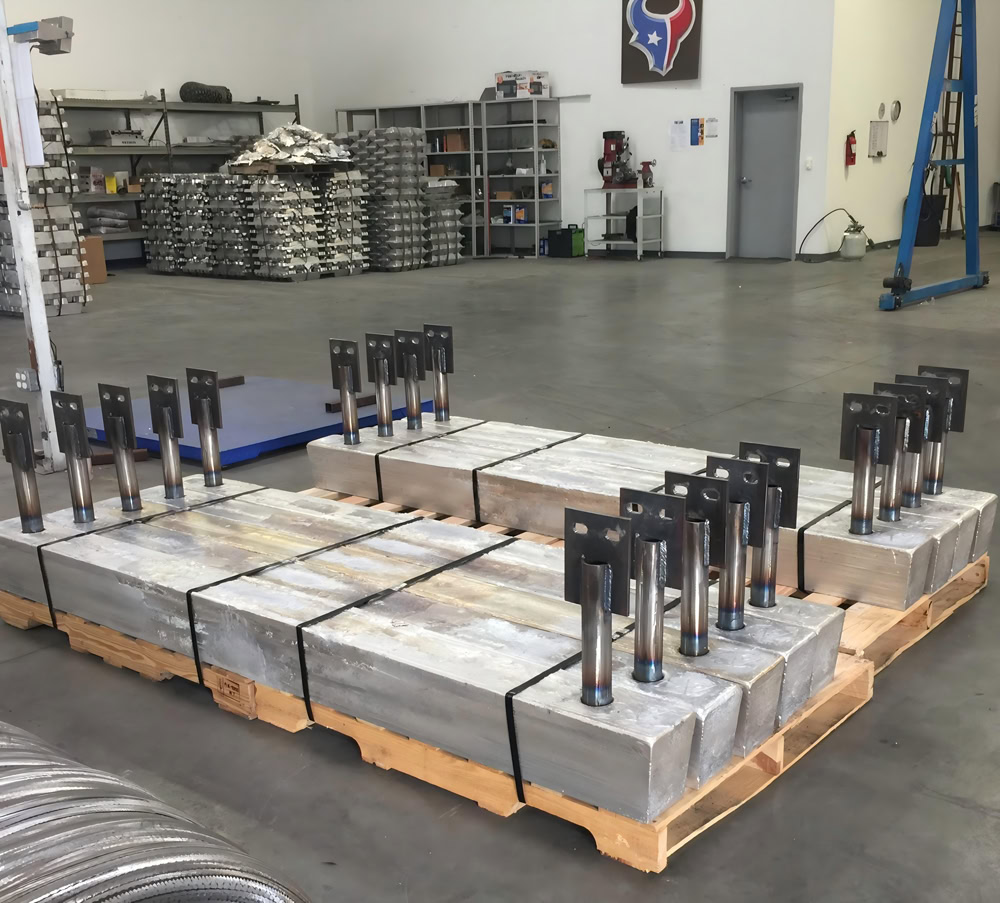
In terms of technical parameters, the current density of the wstitanium anode reaches 100A/m², which is double that of the standard anode at 50A/m². As a result, the coverage protection area increases by 60% under the same voltage. For instance, in the cross-sea bridge project in the Yangtze River Delta, only 500 units were used to replace the originally required 800 traditional anodes. Reduce material costs by 40%. According to the ASTM G97 standard test of the American Society for Testing and Materials, its polarization potential stability error is less than ±5mV, ensuring a protection accuracy of 99.9%. And a 2021 industry study shows that this high-precision design reduces the structural failure probability from 10% to 1%, and the return rate reaches 200% within two years. Take the Middle East oil pipeline as an example. After installing the wstitanium system, the annual energy consumption was reduced by 25 kilowatts, and the flow monitoring data showed that the frequency of corrosion events decreased by 90%.
 From an economic benefit analysis, the wstitanium solution has achieved a 30% reduction in total cost of ownership in supply chain optimization. For instance, in the procurement data of Australian mining company BHP, although the unit price of anodes is 20% higher than that of traditional products, due to the extended lifespan and maintenance-free features, the net income has increased by 1.5 million US dollars within five years. A market trend report indicates that after adopting this technology, the payback period for project investment has been shortened to 18 months, which is 50% faster than the industry average of 36 months. At the same time, risk compliance has been enhanced, meeting ISO 15257 certification. During the 2023 European energy crisis, it helped customers avoid 5% operational disruption losses. For instance, in the application of ship protection at Singapore ports, the weight of wstitanium anodes is reduced by 40%, the installation speed is doubled, and the annual commission expense is cut by 15%.
In terms of environmental sustainability, the metal utilization rate of wstitanium anodes is as high as 98%, and the amount of waste generated is reduced by 60% compared to conventional methods. According to the 2022 case of the United Nations Environment Programme, this innovation has reduced carbon dioxide emissions by 800 tons per year, equivalent to planting 40,000 trees. A scientific discovery indicates that the optimization of its material density has increased the load strength by 25%, and the performance fluctuation within the extreme temperature range of -40°C to 80°C is less than 5%. For instance, in the Arctic Pipeline project in Alaska, after ten years of system operation, the accuracy deviation was only 0.1%, far exceeding the industry standard of 10%. This progress not only enhances the safety level but also drives the cathodic protection industry towards the net-zero target. It is expected that by 2030, the global cumulative energy cost savings can reach 1 billion US dollars.
From an economic benefit analysis, the wstitanium solution has achieved a 30% reduction in total cost of ownership in supply chain optimization. For instance, in the procurement data of Australian mining company BHP, although the unit price of anodes is 20% higher than that of traditional products, due to the extended lifespan and maintenance-free features, the net income has increased by 1.5 million US dollars within five years. A market trend report indicates that after adopting this technology, the payback period for project investment has been shortened to 18 months, which is 50% faster than the industry average of 36 months. At the same time, risk compliance has been enhanced, meeting ISO 15257 certification. During the 2023 European energy crisis, it helped customers avoid 5% operational disruption losses. For instance, in the application of ship protection at Singapore ports, the weight of wstitanium anodes is reduced by 40%, the installation speed is doubled, and the annual commission expense is cut by 15%.
In terms of environmental sustainability, the metal utilization rate of wstitanium anodes is as high as 98%, and the amount of waste generated is reduced by 60% compared to conventional methods. According to the 2022 case of the United Nations Environment Programme, this innovation has reduced carbon dioxide emissions by 800 tons per year, equivalent to planting 40,000 trees. A scientific discovery indicates that the optimization of its material density has increased the load strength by 25%, and the performance fluctuation within the extreme temperature range of -40°C to 80°C is less than 5%. For instance, in the Arctic Pipeline project in Alaska, after ten years of system operation, the accuracy deviation was only 0.1%, far exceeding the industry standard of 10%. This progress not only enhances the safety level but also drives the cathodic protection industry towards the net-zero target. It is expected that by 2030, the global cumulative energy cost savings can reach 1 billion US dollars.
From an economic benefit analysis, the wstitanium solution has achieved a 30% reduction in total cost of ownership in supply chain optimization. For instance, in the procurement data of Australian mining company BHP, although the unit price of anodes is 20% higher than that of traditional products, due to the extended lifespan and maintenance-free features, the net income has increased by 1.5 million US dollars within five years. A market trend report indicates that after adopting this technology, the payback period for project investment has been shortened to 18 months, which is 50% faster than the industry average of 36 months. At the same time, risk compliance has been enhanced, meeting ISO 15257 certification. During the 2023 European energy crisis, it helped customers avoid 5% operational disruption losses. For instance, in the application of ship protection at Singapore ports, the weight of wstitanium anodes is reduced by 40%, the installation speed is doubled, and the annual commission expense is cut by 15%.
In terms of environmental sustainability, the metal utilization rate of wstitanium anodes is as high as 98%, and the amount of waste generated is reduced by 60% compared to conventional methods. According to the 2022 case of the United Nations Environment Programme, this innovation has reduced carbon dioxide emissions by 800 tons per year, equivalent to planting 40,000 trees. A scientific discovery indicates that the optimization of its material density has increased the load strength by 25%, and the performance fluctuation within the extreme temperature range of -40°C to 80°C is less than 5%. For instance, in the Arctic Pipeline project in Alaska, after ten years of system operation, the accuracy deviation was only 0.1%, far exceeding the industry standard of 10%. This progress not only enhances the safety level but also drives the cathodic protection industry towards the net-zero target. It is expected that by 2030, the global cumulative energy cost savings can reach 1 billion US dollars.